Showing posts with label norwegian. Show all posts

Wednesday, April 13, 2022

Alder Wood Smoked Beer(s)


I was recently extremely intrigued and inspired by the Chop and Brew
episode on a beer made with 100% alder smoked malt. While I had kept up with Lars Garshol's blog for years, I had not thought a lot about Norwegian farmhouse styles since brewing a few beers with kveik a few years ago and had fallen behind on my reading. For one thing, I missed that Lars had released a book. For another, I missed how readily available many strains of kveik had become. Maybe what surprised me the most about the video though, was how there was suddenly the ability to buy malts made in the traditional Stjørdal style in the U.S. Within a day or two of watching the video I had placed an order with Sugar Creek Malt Co. and ordered Traditional Farmhouse Techniques so that I could set out on making a beer in this style for myself.

The book arrived first and it did not disappoint. An absolute page turner of history, culture, techniques, and ideas that, despite having read Lars' blog for years, felt new and exciting. I would easily put it in the top few beer/homebrewing books that I've ever read and feel that the information included, and the writing quality in terms of both style and clarity, are top notch. I tore through the book cover to cover and plan to go back to it again regularly.

Mash hops and the (non-traditional) juniper berries about to be added

When the malt arrived I was finally ready to make a Stjørdalsøl inspired beer and put together a very simple recipe of 9.5 lbs Stjørdal malt from Sugar Creek, 1.5 lbs of white sugar, and 1 oz of Hallertau Mittelfrüh. One half of the batch was fermented with a kveik strain (in this case Omega's Voss Kveik), making it (hopefully) close to a traditional Norwegian style. I had originally planned to ferment the other half with a lager yeast to make it closer to a traditional German Rauchbier to give myself a reference point for the flavor of the smoked malt, but after reading the book I was inspired to instead go with a Baltic (specifically Lithuanian) yeast strain in an effort to emulate a historical Gotlandsdricke. While Gotlandsdricke is a fairly different, and very geographically distinct, style it shares some commonalities in that it is a dark, smoked, farmhouse beer often made with juniper that was historically made with a farmhouse yeast so while this recipe might be farther from that style it should be in the ballpark. I had also wanted to try out the Jovaru yeast since it was first released but had not yet had an opportunity. Perhaps the most inauthentic part of this recipe was the use of Juniper berries rather than branches, but it was the closest thing I could easily procure and with the smoked malt being such a driver of the flavor I'm hopeful this won't cause a huge departure from the true flavors of these styles.

9.5 of the 10 pounds were used in this recipe
with the hope to save the last half pound for a future brew
Beautiful light brown color on the smoked
malt and a huge aroma that fills the room

Tasting Notes:
Appearance: Medium brown, very clear. Off white head of thick bubbles is thin but lasts for a while.

Smell: This one explodes out of the bottle with aroma: Very high levels of smoke reminiscent of campfires and smoked meats but also some medicinal and earthy/funky/farm-like aromas. There is some pine, wood, and a touch of toffee in the mix but it is mostly dominated by the smoke and phenol character.

Taste: Taste starts off with a toasty and sweet malt that it is quickly swept away with phenolic smoke. The smoke overwhelms and lingers but other subtle flavors show up throughout with moderate cherry-like fruit and some subtle pine and citrus peel. Finish is lightly piney and citrusy with plenty of smoke that lingers long after the sip.

Mouthfeel: Very low carbonation and moderate body give this a surprising creaminess. Drinks a bit like a cask beer and does not come off nearly as strong in alcohol as it is. No astringency though the smoke lingers in the mouth with the creaminess.

Overall: I'm not entirely sure this was what I envisioned this beer to taste like when reading or hearing descriptions of the style but I'm very glad I made it. The smoke is different and complex and interesting and the other characters seem to blend well. It's hard to know how much of the character comes from anything but the smoked malt but the yeast, hops, and juniper berries may have added a little of the fruit/pine/citrus complexity that work well. If this beer is at all close to the traditional style I can see why so many in the region are taking the effort to not only brew but also malt their grain, it's unlike anything else and extremely enjoyable. I don't know if I'll ever brew this exact recipe again but if I do the only things I would likely change would be to make it more traditional with juniper branches instead of berries and possibly removing the white sugar. I also would likely try a lager strain in place of the Jovaru version, but I should do a full tasting of that half before deciding.

1/29/22
Fittingly cold and snowy brew day for Nordic inspired beer(s). Milled 9.5 pounds of Stjørdal malt on my father's mill. Mashed in at 154F and added half an ounce each of hops and juniper berries. Ran off after an hour rest, added sugar to first runnings and stirred, then put on burner and began heating during sparge. Sparged at 180F, added second runnings to kettle and brought to boil. Added the second .5 oz. dose of hops after about 15 minutes of boiling then boiled for another 60 minutes before chilling. Chilled to low 80s, ran into two separate 3 gallon fermenters and pitched separate yeasts. Placed next to each other and wrapped in towels in a fairly cool basement; hopefully they can rip through fermentation before their temps fall too much.

2/6/22
Fermentation very slow if still active but still a thin krausen.
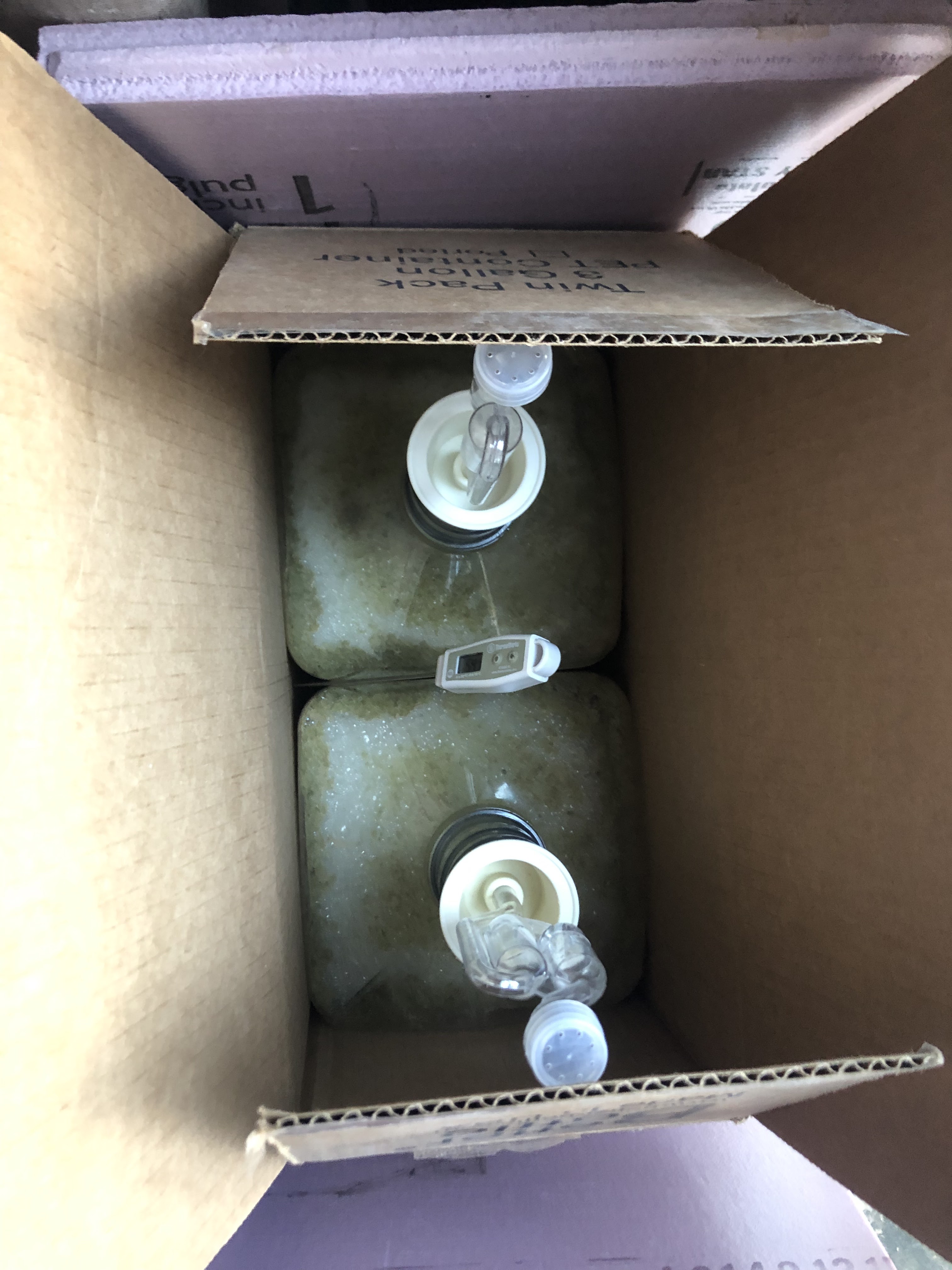
2/17/22
No noticeable fermentation, should probably be packaged by now but currently between houses and this is staying at my parents' house while my equipment is in storage.

3/2/22
Kegged in separate 3 gallon kegs. Taste of both pre-carbonation is very smokey and interesting. Camp fire, pine, cherry, and interesting fruitiness all come through in both with the "Gotlandsdricke" version being dryer and emphasizing the pine and a touch more spicy phenols. TBD whether I carbonate and serve on draft or transfer to bottles.

3/18/22
Bottled both halves. 2/3s of the Stjørdalsøl version was left with the very low (~5 PSI at room temperature) carbonation while the other 2/3s (labeled Stj) received one Cooper's carbonation drop. All of the Gotlandsdricke bottles (except for a couple of 12 oz bottles) received one carbonation drop.

3/23/22
Brought a bottle of each of the low carbonation versions to a DC Homebrewers meeting on 3/19 and one bottle of the low carbonated Voss version to a BADASS meeting. Very well received in terms of it being interesting but not a beer that everyone necessarily enjoyed. Both versions are aggressively smokey with some interesting pine and fruit character. I find the Voss/Stjørdalsøl version has more cherry and citrus while the Jovaru/Gotlandsdricke version is a touch drier and more phenolic, though some felt it was less smokey and very different from the Voss. The phenol level is so high that it occasionally comes across to me as medicinal and chloraseptic-like but in small pours the beer is highly interesting and enjoyable. Hoping to do a more thorough tasting in the future.

4/13/22
Tasting Night, tasting notes above. Tasting notes were done on a small bottle of the low carbonated version of the Voss/Stjørdalsøl version. I may revisit in the future with a higher carbonated bottle or the Gotlandsdricke/Jovaru version.

Friday, February 16, 2018

Kveik Blonde Ales

In November I received a package from DeWayne Schaaf of the Kveik World Order Facebook page and blog. It turns out I was one of the lucky winners of the lottery for kveik's he was sending out which were at the time not commercially available. Kveik is a word used for yeast/yeast blends from certain regions of Norway as documented by Lars Marius Garshol on his Larsblog. I tried reaching out to DeWayne for any other information he could give on the yeasts (attenuation, recipe ideas, etc.) but never got a response so I decided to design a recipe that was versatile enough to handle a wide range of possible yeast interactions.

I used a strain from one kveik blend before when I put the Sigmund's Voss Kveik in a Norwegian influenced version of my Maisonette grisette. That particular beer turned out very interesting, more earthy and subtle than typical for the beer and with a nice orange peel character. The three strains/blends I received are completely different from that batch but I decided to do a somewhat similar beer with moderate gravity and moderate bitterness, but a decent amount of whirlpool hops to keep it interesting while also letting the yeast show through.

After reading some comments about the Ebbegarden potentially having negative interactions with hops/bitterness I decided to use the two other strains for this batch. Terje Raftevold's Hornindal Kveik is said to contain non-souring bacteria and a large number of yeast strains and a blend of some of these strains is available (at least in some capacity in Canada) from Escarpment Labs. The Midbust blend comes from Odd H Midtbust in Stordal and is available (possibly?) from Mainiacal Yeast who describe it as having "stone and tropical fruit notes as well as a light smokiness and acidity".

I chose the Pekko hops for this batch due to having some on hand and seeing them used in a few Saison/farmhouse style recipes and otherwise designed the beer to fall in the American Blonde Ale range.

1/31/18
Brew Day: Heated 7.75 gallons untreated water and mashed in at 156F. Added 2 tsp 10% phosphoric acid. Performed a hybrid sparge to collect 6.75 gallons water at 1.038. Added .6 oz Aramis hops after 30 minutes, then boiled another 30 minutes before adding 2 oz. Pekko and whirlpooling down to 100F. Split the batch between two 3 gallon better bottles and pitched the small tube of each yeast. Underpitching is said to be an important aspect of Norwegian brewing and helps the kveik produce esters during fermentation.

2/1/18
12 hours later Terje half showing signs of fermentation, Midtbust half not so much. After 24 hours Terje is reaching high krausen, still no real life from Midtbust.

2/2/18
Midtbust half showing some krausen, Terje still fermenting heavily.

2/3/18
Both beers look about done fermenting after only about 72 hours since pitching.

2/5/18
Midtbust - Gravity down to 1.010. Taste is bright, citrusy, fruity and with just a mild herbal character and a small amount of bitterness that builds after the finish.
Terje - Down to 1.011, very similar to Midtbust but with maybe a touch more herbal/hoppy flavor.
Both beers taste good but I may have overwhelmed the yeast character with the hops.

2/9/18
Kegged both beers and set to 15 PSI at 48F. Both smell very good, still bright and citrusy. The densest/most stable yeast cakes I've ever seen, to the point that it was hard to transfer the yeast to containers for storage. I can see how this would dry well.

2/15/18
Side by side tasting.

Midtbust
Appearance: Cloudy blonde body, looks like a NEIPA. Moderate white head fades fairly quickly but has maybe a touch more head retention than the Terje version.

Smell: Moderate orange peel and pineapple and sweet grainy malt. Some subtle pine, lemon, herbs, and hay.

Taste: Orange peel and pineapple again lead with some cherry and light grainy malt sweetness. The finish is a low but refreshing hoppy bitterness with a lingering herbal character.

Mouthfeel: Low to medium body with low carbonation. After nearly a week on tap I expected more pop but with the low gravity this works alright.

Overall: A fairly restrained but enjoyable beer. It goes down easy with enough citrus and hop character to be refreshing and keep me coming back for more. Higher fermentation temperatures and more hops might make for a more interesting beer but enjoyable as is. I don't get any of the acidity or smokiness noted by Mainiacal.

Terje
Appearance: Nearly identical to the Midtbust version, with a head that's a touch smaller and fades faster but that could be the glass or pour as much as anything else.

Smell: Again, orange peel is apparent but there is a also a light earthy/funk quality just barely in the mix. Over time I pick up more and more of a processed fruit (fruit snacks/fruit leather) aroma that I've never experienced in a beer. There's a hint of honeysuckle but otherwise no real herbal/hoppy characteristics.

Taste: Rounder and more fruit forward than the Midt version. Again, there's citrus peel but the processed fruit character is somewhat pronounced and fills in the rest of the palate. Less apparent malt graininess and sweetness and less apparent bitterness though it still finishes refreshing with a light lingering herbal character.

Mouthfeel: Feels a touch thicker than the Midtbuster but with similarly low carbonation. This version could definitely use a little more CO2.

Overall: Again a somewhat subdued beer but what's here is good. The 'fruit snack' like character is different from what I've experienced in most beers but might be a bit too strong compared to the other flavors. Overall, a decent and enjoyable but not exceptional blonde-ish ale.