Showing posts with label munich. Show all posts

Saturday, October 22, 2022

Doppelbock '22


Doppelbock has been my go to autumn beer for the past few years. The first iteration of the beer scored a medal at the California State Homebrew Competition. While I usually like to change things up I was very happy with how that beer turned out and have been trying to recreate it in the years since. Last year's version was enjoyable but seemed to be missing something in the maltiness category so I went out of my way to source the Briess Dark Munich (30L) that I had used in the original version and also increased the amount of Caramunich to a full pound. I otherwise kept the recipe largely the same with equal amounts of Pilsner, Vienna, and Munich malts and the pale chocolate malt that may not be traditional but seems to give a nice note of chocolate without being too roasty.

Tasting notes:

Smell: Big malt character pops out with milk chocolate and dark fruit (plum and raisin). The roast and fruit characters are probably a little higher than desired and mostly over power the more subtle bread and crust character from the Munich and Vienna malts. A touch of alcohol comes through as it warms. No hop or yeast derived aromas.

Appearance: Dark brown with nice garnet tints, especially in the light. Fairly clear but has a touch of haze that makes it seem darker. Head is small and off white and quickly fades to a ring of small bubbles.

Taste: Up front there’s a big sweet bread crust-like malt character but this quickly shifts toward a more roasty chocolate and burnt sugar character. Finish had notes of dried fruit and moderate bitterness that blends with the roast character to give a bittersweet chocolate impression. No hop character other than the bitterness.

Mouthfeel: Moderately carbonated and fairly full bodied. Alcohol is not hot but does give a warming sensation over time.

Overall: While not an overly bad beer this is probably the worst of the doppelbocks I’ve made. The roast character seems stronger than in past batches and overshadows the other characters of the beer. While this one seemed to have some rough, near metallic, off flavors when first kegged the additional time at cool temperatures and carbonation seem to have rounded them out. While I was excited to get the 30L dark Munich malt I think it was overwhelmed by using so much Caramunich, especially with the pale chocolate malt also in the mix and I will probably only use a quarter pound of each of those in my next attempt at this style. The failure to set my mill correctly and try to correct it by adding malt extract was also a mistake as it meant there was less of the Munich malt character in the end product to balance the roast and caramelized flavors.

8/19/22
Made a starter from a mason jar of yeast previously used on a Helles and a Pilsner. First time using this 2L Erlenmeyer flask and first time using a stir plate in a long time but both seem to work well. The starter should have been created a few days earlier for maximum viability but this should provide some increase to the amount of yeast available and provide vitality to the yeast already in the mix.

8/20/22
Brewday

Forgot to adjust my mill setting until half way through milling which led to undercrushing and low efficiency. I also added too much sparge water and ended up with ~7.5 gallons pre-boil. Between both of these I ended up with a pre-boil gravity ~1.040 which is no where near what was expected. In order to resolve these issues I did a 2 hour boil and added a pound of dry malt extract. Despite both of these adjustments the post-boil gravity was still only 1.066, a ways short of the planned 1.072 and more in the middle of the Dunkles Bock range than the low end of the the Doppelbock range as intended.

Hops were split between a first wort addition that was boiled the full 2 hours and a later addition that was boiled for only 45 minutes.

After cooling to 80F the wort was transferred to a plastic carboy and placed in the chest freezer at 50F. 

8/21/22
Approximately 18 hours after putting the wort in the chest freezer I shook the carboy to oxygenate and pitched the yeast starter from the stir plate.

8/22/22
Almost 24 hours since pitching it isn't show any real signs of fermentation so I increased the temperature slightly to 52F.

8/23/22
Fermenting strongly.

8/24/22
Fermentation seems to be slowing slightly so I increased the chest freezer temperature to 62 for a diacetyl rest.

8/26/22
Still fermenting, increasing the temperature seems to have kicked it back up a bit. Hopefully this will be able to get rid of any diacetyl without producing esters.

8/29/22
No signs of fermentation at this point. Began cooling off by lowering to 55F. Will continue decreasing temps for a few days until it gets down to lagering range.

9/28/22
I got a terrible sinus infection that hit me hard for nearly a month and took very poor notes during this time. The beer was eventually lagered, then kegged only to have my CO2 tank kick. 2 CO2 tanks later (I setup another one while still sick only to find out later a different keg was leaking) it is finally carbonated and starting to taste close to expectations.

9/29/22
Tasting above.

12/29/22: This batch kicked after adding a 1/2 gallon to a growler and drinking/dumping the remaining ~1/2 gallon. This one got pretty mixed reviews, no real complaints (other than one person saying it was watery(?) and it received a few strong compliments but very few people went back for a second pour and I rarely found myself choosing to reach for it during the 3+ months it spent on tap. I’m interested in rebrewing this with less character malts and a greater eye toward yeast health and fermenting temperatures but that likely won’t be any time soon.

Monday, July 18, 2022

Smoked Helles '22


Smoked Helles has become my go to spring beer since first brewing a split batch that included it several years ago. This year I got a later start on it than usual but still wanted to get one going to have it on tap for the summer. Something about the low levels of bitterness, moderate crackery and bready malt, and a noticeable sweet smoke character from cherrywood smoked malt makes this one a refreshing drinker in the warm weather. It will be interesting to see how the Sugar Creek smoked malt compares to the Briess that I've used in previous versions.


Simple smoked helles:

75% (7.5 lbs) Pilsner malt (Weyermann)

10% (1 lb) Cherrywood Smoked Malt (Sugar Creek)

10% (1 lb) CaraHell (Weyermann)

5% (.5 lbs) Vienna Malt (Weyermann)

Tasting Notes:

Smell: light sweet caramel and honey like malts up front. The smoke comes through more as I drink but is fairly restrained and enjoyable giving notes of fruity sweetness and a touch of pork barbecue. No noticeable yeast or hop derived aromas.

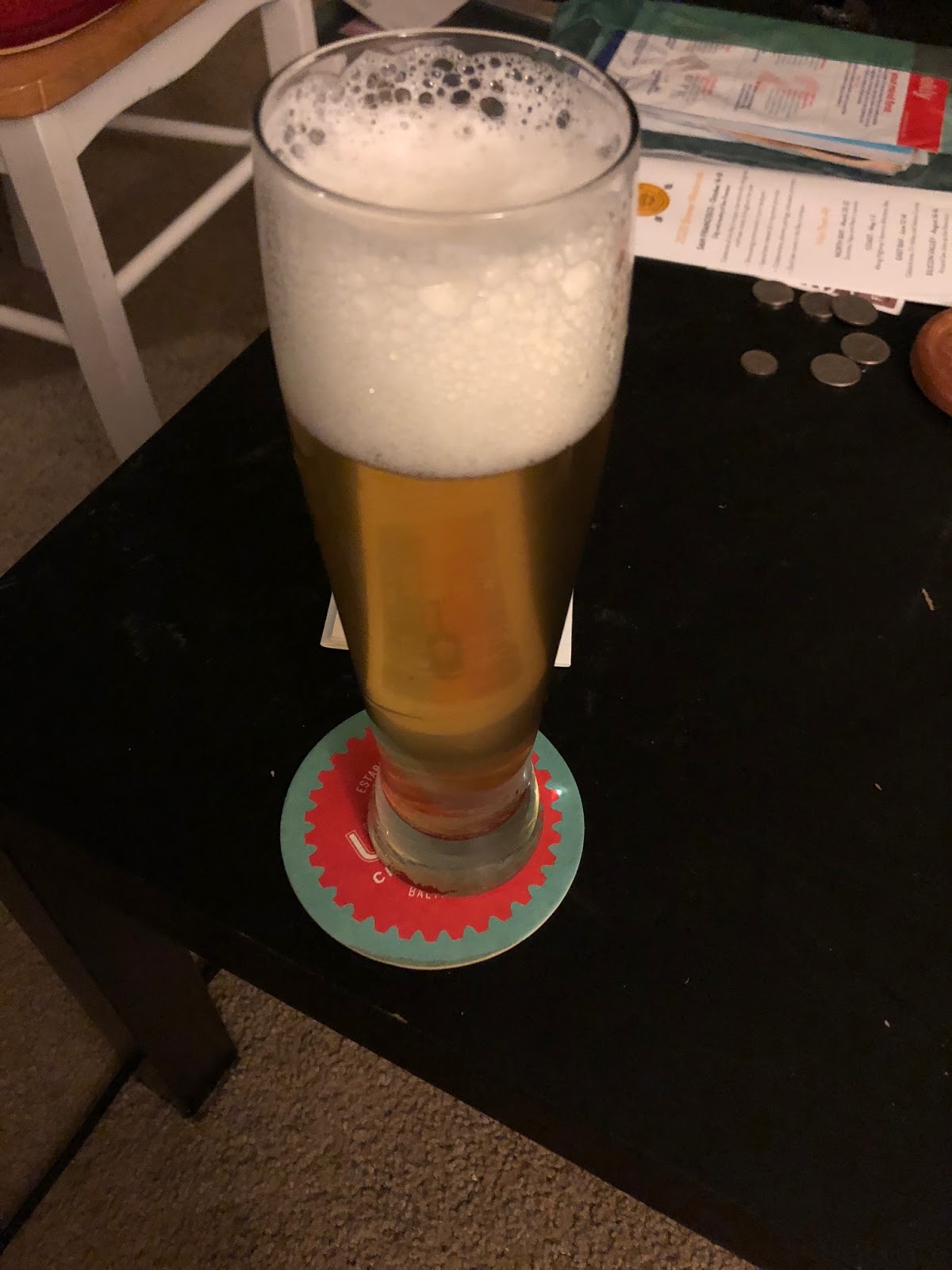
Appearance: bright gold with a large fluffy white head. Probably a little too much carbonation making the head larger than intended but it works. The head fades fairly quickly to a thin layer but that thin layer then lasts throughout. Clarity isn't crystal clear but very good given that there were no filtrations or finings used.

Taste: leads with a lightly sweet and grainy malt character giving cracker, bread, and breakfast cereal notes that then wash slowly into a mild sweet and very lightly smokey flavor that lasts through a light but refreshing bitterness.

Mouthfeel: dry and crisp. Carbonation is maybe just a touch high but this drinks very well. Body is just the right level to let the flavors hit the entire mouth before fading away.

Overall: a very enjoyable and refreshing beer that I could happily drink multiple half liters of. The smoke is fairly low but I go back and forth on whether I would like it to be higher. Any less and it should be left out entirely but any higher and it might dominate some of the subtler character that makes the beer so enjoyable and refreshing. Even with how much I like to tweak my brews I could definitely see making this exact same recipe again with no changes. This one is probably in the top 10 beers I’ve brewed but probably wouldn’t make my top 5.

5/11/22
Planned out a vacation day to recover from the previous night's awesome The Menzingers show and brew a beer.

Mill had a couple rusty spots. Attempted to clean but couldn’t fully get them off, hopefully it doesn’t come off/carry through in the beer.

Mash started at 154 but fell to 148 by end. Mashed out with 1 gallon at 180F, ran off then batch sparged with water at 180F to reach 6.5 gallons.

Surprisingly little smoke smell during runoff. Maybe I should have upped the amount of smoked malt but at least I have 9 more pounds left to work with.

Brought to boil and added 1 oz Hallertau Mittelfruh hops and boiled for 60 minutes with an addition of Irish moss at 10 minutes. Chilled with immersion chiller to below 80F, transferred to 6 gallon plastic carboy and placed in kegerator at 45F.

After 7 hours pitched one jar of Munich lager yeast previously used for Maibock.

12 hours after pitching (19 after brewing) increased chest freezer temp to 50F. Added 1 pack of Lallemand Diamond Lager Yeast 8 hours later.

5/13/22
After 48 hours still not seeing any signs of active fermentation so increasing chest freezer temp to 55F

5/22/22
Still slowly fermenting with a decent krausen, increased chest freezer temp to 60F

5/27/22
Fermentation looks complete with just a few yeast rafts on top. Began slowly cooling.

6/12/22
After about 2 weeks at 30F the beer is still looking similar with some small yeast rafts but seems to be clearing up and looks ready for packaging soon. Gravity measurement shows it down to 1.011. Taste is fairly clean but a touch lighter on the smoke than I would like and maybe a little thinner/more watery, but both might improve with carbonation and warmer serving temperature. Will likely keg sometime in the next week.

6/17/22
Transferred to keg and set in chest freezer at 50F.

6/19/22
Poured a small sample tasting. Surprisingly clean, the smoke just barely shows up in the nose when I search for it, otherwise taste and smell is mostly clean with light herbal and honey character. I would probably use at least twice this much smoked malt, possibly more, if making this recipe with the same ingredients again. Not bad but closer to a plain helles than a smoked anything.

7/15/22
Tasting day with notes above. After about a month in the keg this one is quite nice. Interested to see what 9 pounds of the smoked malt does on its own given how subtle it is at 10% of a batch. It seems to be a bit more subtle than other cherrywood smoked malts I've used but has a very nice character to it.

Sunday, March 29, 2020

Munich Melon Hülles Lager

Nelson Version
I took a bit of a break from brewing (and even more of a break from blogging) but got back to it in January with a hoppy lager that is partially inspired by a line from Scott Janish's great book The New IPA. Specifically there's a note that Hüll Melon (sometimes written Huell Melon) is high in the 2MIB (2-methylbutyl isobutyrate) thiol which gives an apricot-like character, and can be enhanced even more with a lager fermentation. Some of these ideas are explored in this blog post by Scott. A fruity, (especialy apricot-y and melon-y) Munich Helles might not be classic but the subtle malt sweetness and graininess should lend balance and space for the hops to shine, without this coming out as a hazy IPA (or IPL). Searching around the internet it seems that a Helles with Hüll Melon has been done before by several breweries, including one of my favorite East Bay brewers, Original Pattern, with their Hella Hüll Helles Lager. I'll have to track down a can to compare with my version.


1/20/2020 Brew Day
Made a vitality starter of 8 oz DME, 1g Fermaid-k, 1800 mL water, 2 moderately old packs of Wyeast 2308 Munich Lager and a blend of lager yeast saved from my SMaSH Pils.

After several recent batches came out with a strange, harsh character I decided to not treat the water for this batch at all. While I'm not sure water chemicals are the cause of my recent issues I've narrowed it down to a few possible factors and this seemed like the easiest one to test. If this batch experiences the same issues I'll try adjusting my mill settings and do a full inspection of my equipment and review of my processes to see if there's another possible culprit. I'm including extra notes on this batch here to be able to pinpoint the cause of the issue if it happens as well too

Measured and milled 7.25 pounds Weyermann Pilsner malt and 9 oz Briess Goldpils Vienna. I planned to use Carahell but forgot I was out, should come out a little crisper and maltier with the Vienna but with a similar color.

Hit 152 on the direct infusion (a few degrees cooler than expected but close enough). Added half an ounce of hops to the first wort and began heating while batch sparging. Hit a combined pre-boil gravity of 1.039, about what was expected for the target 1.047 OG. Boiled for 1 hour then rapidly cooled with immersion chiller (added 45 minutes into boil) to 160. Added the 1.5 ounces of whirlpool hops then continued chilling for about 15 minutes to 68F (room temp). Ran off to plastic carboy through silicon tubing and moved carboy to chest freezer set to 50F. Pitched yeast a few hours later.

1/24/2020
Fermentation still going moderately with a medium sized krausen. Plan to move out of chest freezer to ~65F room temp for a few days once fermentation begins to drop. Smell from fermentation is strong with sulfur stink, hopefully that's being pushed out and won't carry to the final beer.

1/25/2020
Left in chest freezer but adjusted temperature up to 65F. Will likely take a few days to warm that high.

1/31/2020
No noticeable diacetyl on tasting and gravity down to 1.014. Set chest freezer to 32F for quick lagering.

2/6/2020
Split between 2 separate 2.5 gallon kegs, one plain one with an ounce of Nelson Sauvin hops.


2/19/2020
Plain Version
This one has been on tap for a couple of weeks and is a pretty enjoyable helles at this point. While there was a decent amount of fruitiness from the hops in the non-dry hopped version originally that has largely faded into a bready malt forward easy drinking lager. The dry hopped version was terrific early on, then seemed to experience some hop creep and had diacetyl, it was removed from the chest freezer for a few days and seemed to clear up but the hop character mostly faded as well.

3/28/20
Nelson half kicked, it was a really nice easy drinker with just enough fruity hop character to keep it interesting. The un-dryhopped version is much more straight forward, it's extremely easy to drink but is arguably too clean and many craft beer lovers would probably find it boring.