Saturday, July 16, 2022

Summer/Sommer Ales


Originally designed as an all grain batch inspired by Heavy Seas old Summer Ale (later renamed Sea Nymph) that I enjoyed in the summer of 2011. For the malt bill (and much of the beer) I aimed for this to ride the line between an American blonde ale and an American wheat ale with about 20% wheat and just a small amount of light caramel malt. Sea Nymph appears to have been 4.5% abv which fits the idea of a blonde or American wheat, though other styles could also fit that profile. While Comet is likely not the hop used in that beer I think it’s citrus and tropical character should go well in small amounts to balance the malt. I had originally designed the recipe to be straight forward with 2-row, wheat, and caramel 20 as the ingredients so in changing to an extract version I aimed for something similar but used Carahell in place of the crystal 20 and replaced the 2-row and wheat malts with a blend of extra light and wheat dry malt extracts. Half the batch will be fermented with Omega Lutra kveik, a strain notorious for its lager like character, and the other half on the classic Fermentis SafAle US-05 American ale yeast. This should give me two variations on a Summer (or Sommer in Norwegian) ale.

This along with my previous and next brews that will be on tap this summer are intended to be fairly pale, moderate in alcohol, refreshing, and interesting without being overly strong in any way, allowing for quaffability and cooling off in the heat. The two other beers of summer '22 are a lightly smoked Helles (usually my spring beer) and a Czech Premium Pale Lager (aka Bohemian Pilsner). Most likely these three will be the only beers I have on tap for the upcoming summer months, though summer essentially started weeks ago with temperatures topping 90F here in Maryland. I guess you could say they're "lawn mower" beers, though maybe a bit more complex and interesting than your average one.

Compared to the slightly smoke forward helles and noble hop forward Pils this beer should round out the mix by being a little more fruity due to the yeast and the American hops. If I am able to find some extra time to brew an additional batch to join these it would likely be a saison/grisette or a simple quick sour, since both could be enjoyable light drinkers but also provide something different than these 3 offer. My next brew day following these 3 was used to get some long aged sours started, with some lagers also planned to be brewed later this summer that will likely not be ready until the fall, after The Beers of Summer are gone.

6/8/22
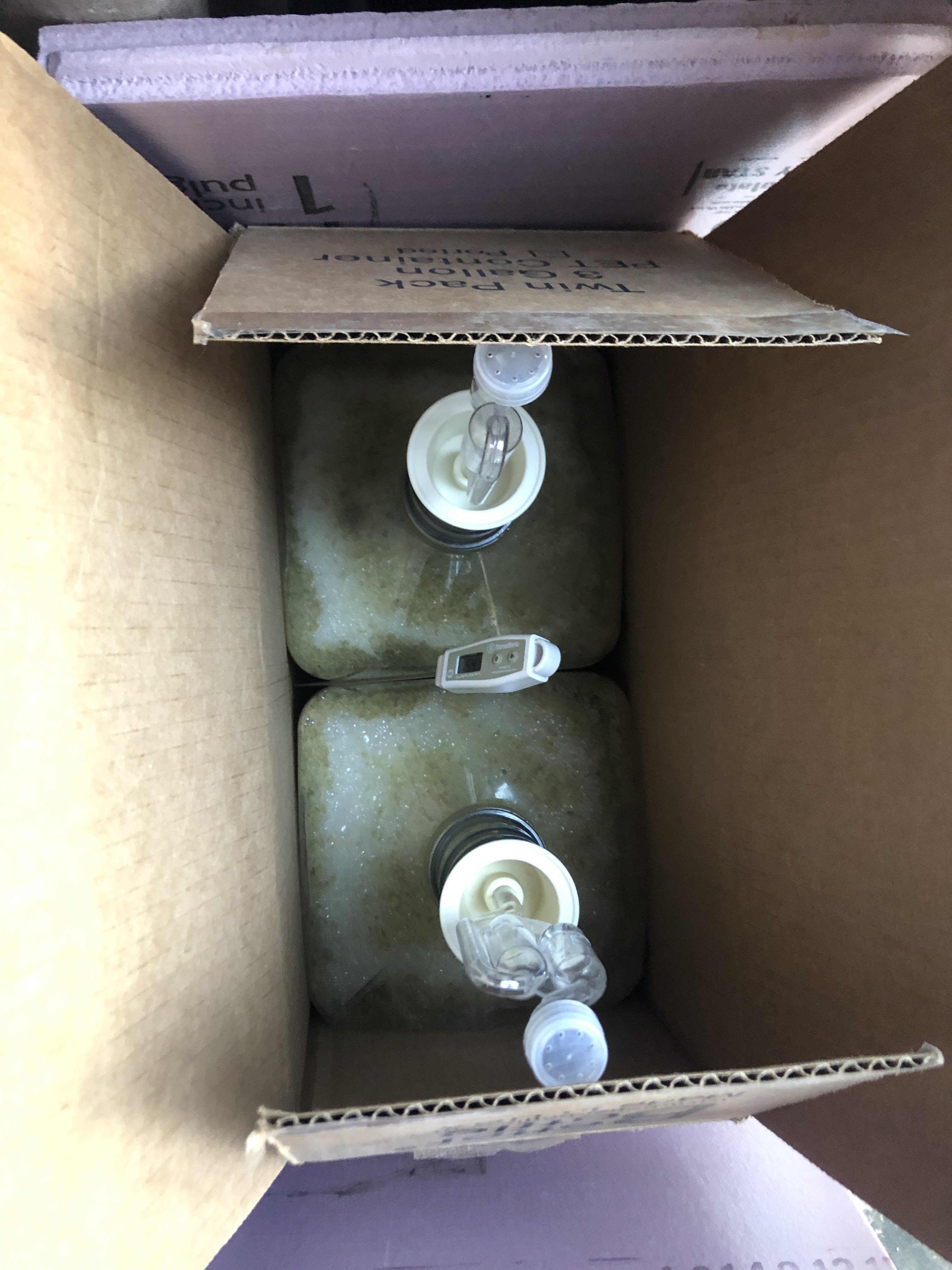
Brewed after work inside on stovetop due to storms outside. This beer is the first time brewing a stovetop batch in this house and first time in a while doing an extract with steeping grains.  Ran into a few unexpected issues, including needing to take the wort outside to chill since my immersion chiller didn't connect to the kitchen sink as it had in my old apartment and the boil off being much lower than on my usual burner leading to more than an extra half gallon of wort that was added to a 1 gallon jug and pitched with dregs from a bottle of Saison DuPont and dregs from a bottle of my homebrewed "Gotlandsdricke" made with Jovaru yeast. The Lutra version was transferred to carboy around 90F while US-05 batch was chilled to ~80F (as far as I could easily get it down to). The two ended up being blended some prior to pitching yeast and pitching was slightly delayed so the Lutra version was probably a little lower than 90 at time of yeast being added and US-05 may have been in the upper 70's. Both were covered with shirts to prevent light and left in basement in low 60F ambient temps.

6/9/22
Despite pouring a decent amount of wort from the carboys to the extra jug in order to give headspace in the carboys the Lutra version fermented so strongly overnight that it blew off its airlock less than 12 hours after pitching. That version was left to open ferment and slowly bubble over the top of the carboy for about 12 hours before seeming to calm down at which point the airlock was re-attached.
US-05 version was also bubbling away after 12 hours but not nearly as intensely, while the farmhouse yeasts version isn’t showing much sign of life even 24 hours later.

6/12/22
Basement has warmed up some along with the outside temps and is now hovering between the mid and upper 60s, which should be good for both versions of this beer as this is around the low end of recommended temperature range for Lutra and the middle of the range for US-05.
Lutra version is barely bubbling, opening the airlock gives smells slightly of yeastiness and the kveik "twang" that people sometimes mention with this strain (milk/yogurt/overripe citrus?). This batch is likely done fermentation but may need a few days to clean up. Gravity sample shows 1.013, sample tastes and smells more fruity, citrusy and refreshing than carboy smells. Not clear or clean so I would not call this very lager like at this point but definitely enjoyable.
US-05 version is still fermenting moderately with a large krausen, lifting the airlock gives aromas that are citrusy and pleasant, but probably needs at least a week to finish and clean up so I didn't take a gravity sample yet.
Farmhouse version is showing some signs of life with a decent layer of krausen, smell off the airlock is smoky, probably from the Gotlandsdricke dregs. It will be interesting to see whether the smoke persists strongly through to the finish but I have no real plans for this small amount of beer so if it's unenjoyable it will be easy to dump and if it is enjoyable it might get bottled or blended in with something else.

6/17/22
Kegged both versions. Probably should have waited on the US-05 as first pour is tasting yeasty and a bit strange. Lutra version also tastes a bit more yeasty and less lemony and refreshing than the previous sample but that may be due to the yeast getting stirred up and coming out in the first pour here. Kegerator set to 50F with 20 PSI.

6/19/22
Poured a small sample of each. Both have a bit of a pizza aroma: herbal (basil and savory) and bready (dough, yeast, crust). The Lutra version tastes more lemony and nice, not clean but a pleasant character. US-05 is less clear in appearance and the flavor is closer to the nose with herbal and slightly yeasty notes. Both versions are under carbonated at this point. Hoping with some more time they can clean up. Neither is necessarily unpleasant at this point but they don’t quite hit the notes I’m hoping for in a refreshing summer ale where I probably would have liked a little bit less body and more lemony citrus character.

7/16/22
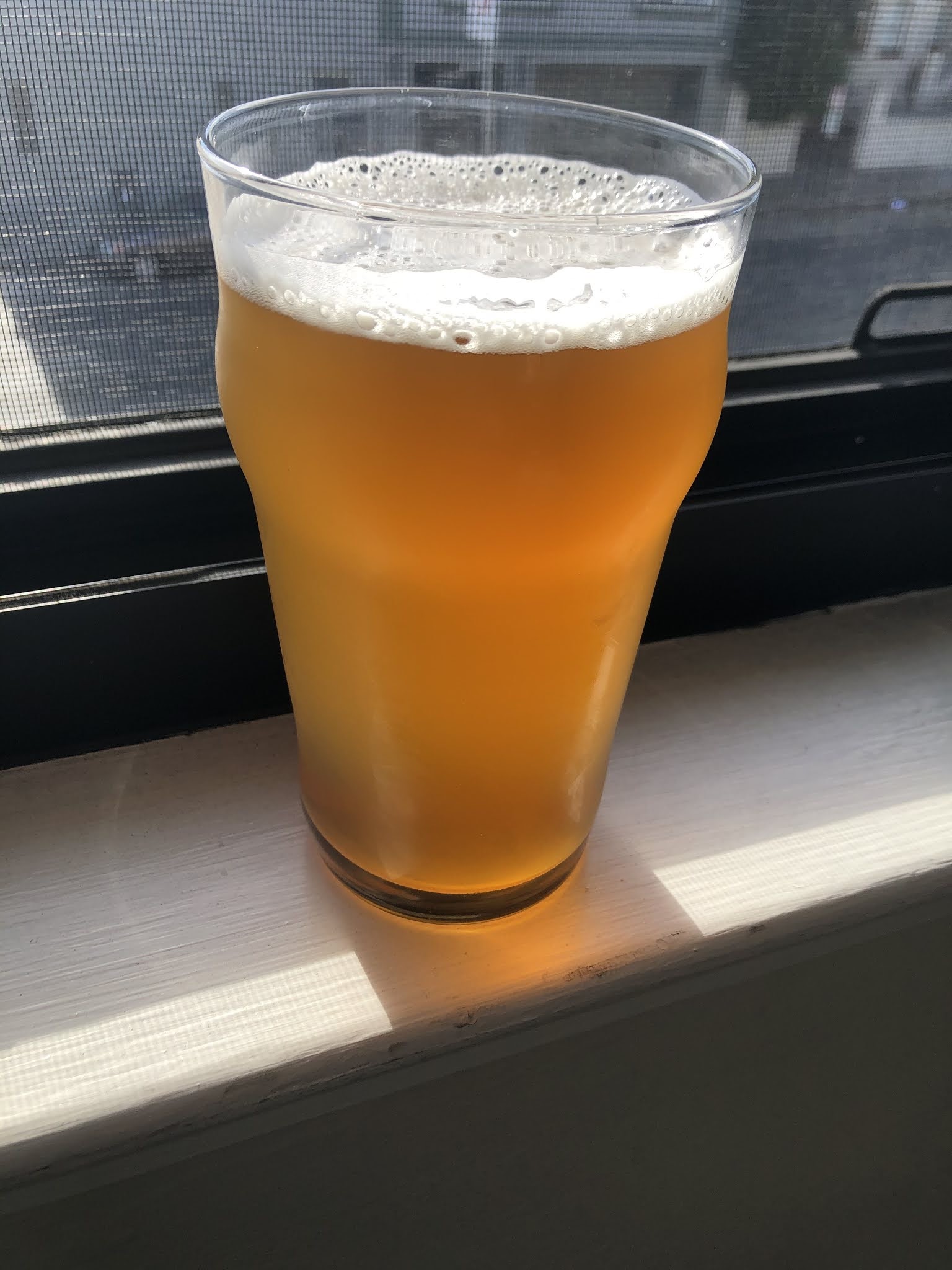
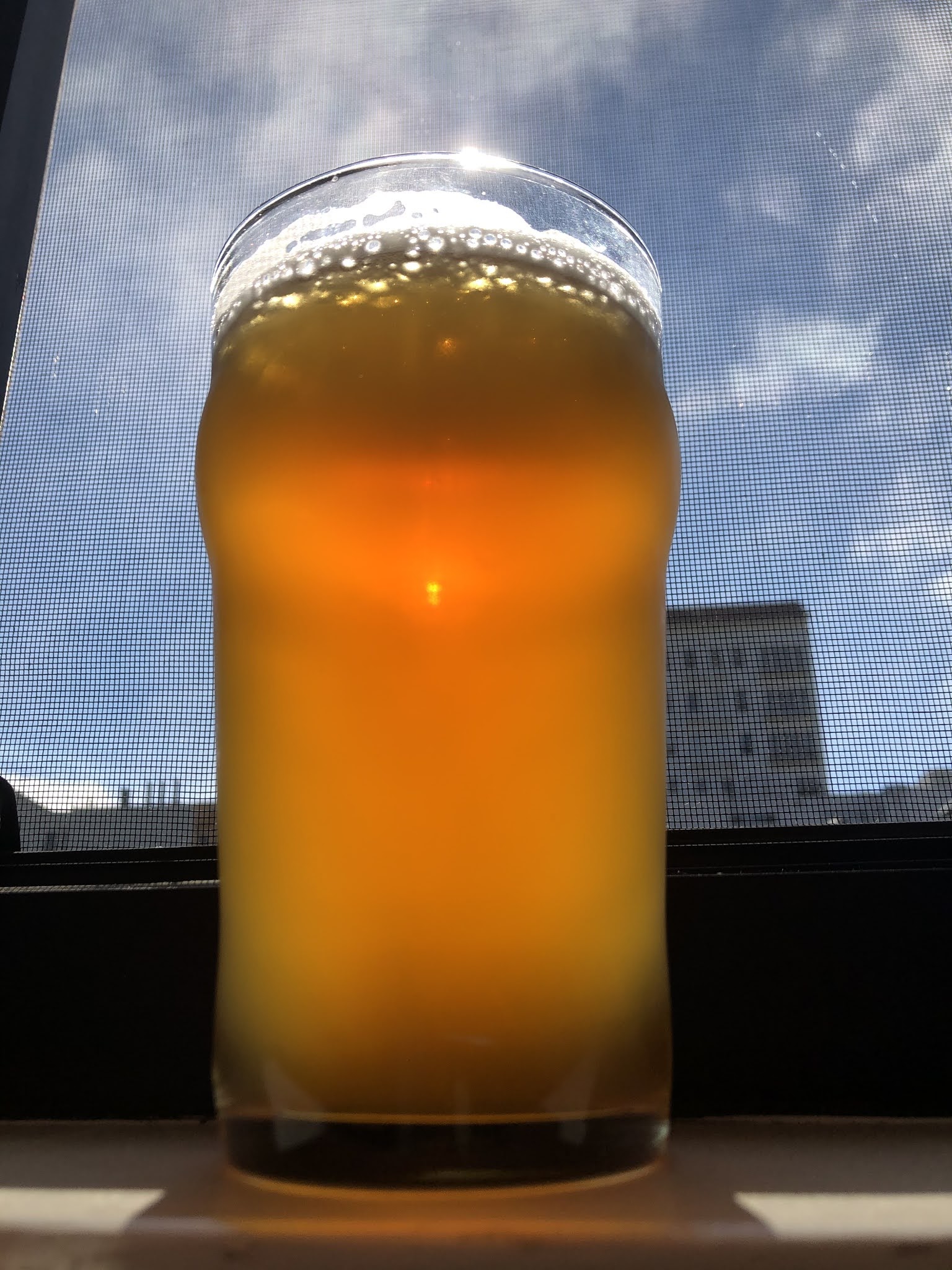
Side by side tasting of both versions with image above. Despite some differences and pros and cons to each I’m not sure I have a preference on either version but am fairly happy with the beer overall and am happy to have a lightly fruity, fairly low ABV, and otherwise fairly unremarkable, beer on tap.

Sommer (Lutra kveik version)
Smell: orange peel, nondescript fruitiness, light honey, cracker, and wheat bread malt notes. Fruitiness and a touch of milk caramel note is more noticeable after a few sips.

Appearance: fairly opaque golden orange with a large white fluffy head with good retention. Not hazy like a NEIPA but very far from clear and even more opaque than the American Ale yeast version.

Taste: similar to the nose with moderate fruity and slightly citrusy notes blending with mild graininess. Finish is again slightly milk caramel with a touch of tropical fruit. Hard to discern yeast from hops. Bitterness is very low but just enough

Mouthfeel: medium low body with medium carbonation and a touch of creaminess. Pretty nice.

Overall: I would definitely not say that this yeast produces anything like a lager as it is advertised, but as a moderately neutral and very fast fermentor it did a solid job. Not the best beer and I may have actually enjoyed it more with more kveik character but it was an easy to produce and easy to drink brew.

Summer (US-05 version)
Smell: similar to Lutra version with fruit, light citrus, and malt but also some doughy and yeasty character and a touch of pine. As I drink it that classic American hop citrus and pine-like character comes out more and more. 

Appearance: fairly cloudy but I can see my fingers through the glass unlike the kveik version. Large white fluffy head with good retention.

Taste: less rounded than the kveik version with the hops coming through more noticeably (though not super strong) with pine and citrus. Bitterness seems higher with less sweet malt character noticeable and none of the milk caramel character.

Mouthfeel: medium low body with medium carbonation. Maybe a touch thinner than the other version but in a nice range for the style and makes for a light summer drinker.

Overall: not quite what I was going for with this beer but certainly enjoyable enough. This version has less fruit/tropical and sweet malt character than the kveik one but still has enough enjoyable notes to go back for more.

Wednesday, April 13, 2022

Alder Wood Smoked Beer(s)


I was recently extremely intrigued and inspired by the Chop and Brew
episode on a beer made with 100% alder smoked malt. While I had kept up with Lars Garshol's blog for years, I had not thought a lot about Norwegian farmhouse styles since brewing a few beers with kveik a few years ago and had fallen behind on my reading. For one thing, I missed that Lars had released a book. For another, I missed how readily available many strains of kveik had become. Maybe what surprised me the most about the video though, was how there was suddenly the ability to buy malts made in the traditional Stjørdal style in the U.S. Within a day or two of watching the video I had placed an order with Sugar Creek Malt Co. and ordered Traditional Farmhouse Techniques so that I could set out on making a beer in this style for myself.

The book arrived first and it did not disappoint. An absolute page turner of history, culture, techniques, and ideas that, despite having read Lars' blog for years, felt new and exciting. I would easily put it in the top few beer/homebrewing books that I've ever read and feel that the information included, and the writing quality in terms of both style and clarity, are top notch. I tore through the book cover to cover and plan to go back to it again regularly.

Mash hops and the (non-traditional) juniper berries about to be added

When the malt arrived I was finally ready to make a Stjørdalsøl inspired beer and put together a very simple recipe of 9.5 lbs Stjørdal malt from Sugar Creek, 1.5 lbs of white sugar, and 1 oz of Hallertau Mittelfrüh. One half of the batch was fermented with a kveik strain (in this case Omega's Voss Kveik), making it (hopefully) close to a traditional Norwegian style. I had originally planned to ferment the other half with a lager yeast to make it closer to a traditional German Rauchbier to give myself a reference point for the flavor of the smoked malt, but after reading the book I was inspired to instead go with a Baltic (specifically Lithuanian) yeast strain in an effort to emulate a historical Gotlandsdricke. While Gotlandsdricke is a fairly different, and very geographically distinct, style it shares some commonalities in that it is a dark, smoked, farmhouse beer often made with juniper that was historically made with a farmhouse yeast so while this recipe might be farther from that style it should be in the ballpark. I had also wanted to try out the Jovaru yeast since it was first released but had not yet had an opportunity. Perhaps the most inauthentic part of this recipe was the use of Juniper berries rather than branches, but it was the closest thing I could easily procure and with the smoked malt being such a driver of the flavor I'm hopeful this won't cause a huge departure from the true flavors of these styles.

9.5 of the 10 pounds were used in this recipe
with the hope to save the last half pound for a future brew
Beautiful light brown color on the smoked
malt and a huge aroma that fills the room

Tasting Notes:
Appearance: Medium brown, very clear. Off white head of thick bubbles is thin but lasts for a while.

Smell: This one explodes out of the bottle with aroma: Very high levels of smoke reminiscent of campfires and smoked meats but also some medicinal and earthy/funky/farm-like aromas. There is some pine, wood, and a touch of toffee in the mix but it is mostly dominated by the smoke and phenol character.

Taste: Taste starts off with a toasty and sweet malt that it is quickly swept away with phenolic smoke. The smoke overwhelms and lingers but other subtle flavors show up throughout with moderate cherry-like fruit and some subtle pine and citrus peel. Finish is lightly piney and citrusy with plenty of smoke that lingers long after the sip.

Mouthfeel: Very low carbonation and moderate body give this a surprising creaminess. Drinks a bit like a cask beer and does not come off nearly as strong in alcohol as it is. No astringency though the smoke lingers in the mouth with the creaminess.

Overall: I'm not entirely sure this was what I envisioned this beer to taste like when reading or hearing descriptions of the style but I'm very glad I made it. The smoke is different and complex and interesting and the other characters seem to blend well. It's hard to know how much of the character comes from anything but the smoked malt but the yeast, hops, and juniper berries may have added a little of the fruit/pine/citrus complexity that work well. If this beer is at all close to the traditional style I can see why so many in the region are taking the effort to not only brew but also malt their grain, it's unlike anything else and extremely enjoyable. I don't know if I'll ever brew this exact recipe again but if I do the only things I would likely change would be to make it more traditional with juniper branches instead of berries and possibly removing the white sugar. I also would likely try a lager strain in place of the Jovaru version, but I should do a full tasting of that half before deciding.

1/29/22
Fittingly cold and snowy brew day for Nordic inspired beer(s). Milled 9.5 pounds of Stjørdal malt on my father's mill. Mashed in at 154F and added half an ounce each of hops and juniper berries. Ran off after an hour rest, added sugar to first runnings and stirred, then put on burner and began heating during sparge. Sparged at 180F, added second runnings to kettle and brought to boil. Added the second .5 oz. dose of hops after about 15 minutes of boiling then boiled for another 60 minutes before chilling. Chilled to low 80s, ran into two separate 3 gallon fermenters and pitched separate yeasts. Placed next to each other and wrapped in towels in a fairly cool basement; hopefully they can rip through fermentation before their temps fall too much.

2/6/22
Fermentation very slow if still active but still a thin krausen.

2/17/22
No noticeable fermentation, should probably be packaged by now but currently between houses and this is staying at my parents' house while my equipment is in storage.

3/2/22
Kegged in separate 3 gallon kegs. Taste of both pre-carbonation is very smokey and interesting. Camp fire, pine, cherry, and interesting fruitiness all come through in both with the "Gotlandsdricke" version being dryer and emphasizing the pine and a touch more spicy phenols. TBD whether I carbonate and serve on draft or transfer to bottles.

3/18/22
Bottled both halves. 2/3s of the Stjørdalsøl version was left with the very low (~5 PSI at room temperature) carbonation while the other 2/3s (labeled Stj) received one Cooper's carbonation drop. All of the Gotlandsdricke bottles (except for a couple of 12 oz bottles) received one carbonation drop.

3/23/22
Brought a bottle of each of the low carbonation versions to a DC Homebrewers meeting on 3/19 and one bottle of the low carbonated Voss version to a BADASS meeting. Very well received in terms of it being interesting but not a beer that everyone necessarily enjoyed. Both versions are aggressively smokey with some interesting pine and fruit character. I find the Voss/Stjørdalsøl version has more cherry and citrus while the Jovaru/Gotlandsdricke version is a touch drier and more phenolic, though some felt it was less smokey and very different from the Voss. The phenol level is so high that it occasionally comes across to me as medicinal and chloraseptic-like but in small pours the beer is highly interesting and enjoyable. Hoping to do a more thorough tasting in the future.

4/13/22
Tasting Night, tasting notes above. Tasting notes were done on a small bottle of the low carbonated version of the Voss/Stjørdalsøl version. I may revisit in the future with a higher carbonated bottle or the Gotlandsdricke/Jovaru version.

StarTropics ‘22

My dog enjoying play time during the brew day

Yet another rebrew of a recipe that I’ve enjoyed in the past. As with my last brew (Breakfast Stout) I attempted to aim for my favorite of the versions I had previously made but there’s no guarantee I’ll get the same results. This hazy/New England style IPA recipe has changed a lot over time but for this attempt I’m going back to the version that was co-crowd favorite at the DCHB BBQ at 3 Stars brewing many years ago. While I did make a blog post about that beer and have what seems to be the recipe (it was only labeled as StarTropics and I've lost most of my recipes over the years) I don’t have a lot of my notes, including the water profile, mash temperature, and the temperatures for the hop rest. I’m also not sure these were the exact hop additions used, including the ratios being different than I remember and the 60 minute hop addition seeming fairly large. With the hoppy saison I recently brewed already tasting more hoppy and bitter than expected I decided to lean towards a less hoppy recipe for this one and cut the 60 minute hop addition (in this case a first wort hop addition) from 1.5 oz to .5 and used the Comet I have on hand in place of Nugget. I considered cutting the boil hops entirely but did not want to stray too far from the previous recipe and didn't particularly care for the last no boil hop NEIPA I brewed.
Due to the lack of notes from that recipe I decided to take detailed brew day notes this time in case this batch also turns out particularly well (or to have a reference if there’s things to improve upon).

Tasting Notes:
This beer never fully turned around (detailed process notes below) but I'll do a full set of tasting notes anyway.

Appearance: Nice golden hue and substantial, but not offensive to my tastes, levels of haze. Finally pours with a small head though it recedes to a small ring fairly quickly. Looks the part of a hazy IPA in most ways.

Smell: Sweet overripe fruit (melon, papaya) and earthy, hay-like, sweet malt dominate with a light touch of citrus peel and pine.

Taste: Subtle fruity and dank characters lead with a big sweet malt middle finishing with a piney and herbal bitter ending. Touches of lemongrass, pine, earth, and melon throughout but none of the big, bold, tropical fruit character I would expect from the hops used. Adding the acid and calcium chloride seems to have knocked out most of the rough edges but may have also tampered down on the desirable hop characteristics.

Mouthfeel: Relatively low carbonation but moderate body, there's a lingering effect in the mouth that I believe is due to the calcium chloride but may also be from the oats or hops. While it could still probably use a little more carbonation it's not unenjoyable at this level.

Overall: A relatively disappointing beer. Far from the worst I've made but the hops just don't pop with the fruity, juicy, tropical character that they should and instead the overall impression feels a bit green and lackluster. Next time I will likely cut out the sugar and golden naked oats and use all 2-row rather than Maris Otter to keep the malt bill more straightforward (though I might add some wheat), shift to using more of the hops in the boil and late hop stand and filter more of the hops during the transfer to the carboy in order to reduce the grassy/green/polyphenol characteristics, and probably adjust the water chemistry to use less calcium chloride or at least less in proportion to the amount of gypsum. In the end I don't hate this beer and have no plans to dump it but it doesn't excite me like the best versions of my StarTropics recipes have.

3/18/22
Weighed and milled grain in preparation for brewing today. Collected 4 gallons and added 2g CaCl and 1g Gypsum for the mash water. I had planned to use twice as much of each but ran out of gypsum. I also collected another separate 4 gallons for the sparge and added a quarter campden tablet to each.

All grains for the mash bill mixed together

3/19/22
Brewday

Mashed in with 3 gallons of 180F strike water hitting my target 155F.

Hop smells from freshly opened 2021 hop pellet bags from Hops Direct:

Comet: Light pineapple and mango, some other tropical and citrus aromas. Light grassy and earthy aromas.

Citra: more pungent papaya and mango. More lemongrass than grass/earth.

Azacca: again similar with some light pineapple and red papaya. Lighter earth/grass than comet but not really the lemongrass of Citra.

Galaxy: very different. Still some pineapple and tropical fruit smells and lemongrass but with a pungent pine/dank/funk character

All 4 smell enjoyable and carry similar tropical fruit notes. After walking out of the room the hops were in then re-entering I was hit with a huge blast of tropical fruit hop aroma, hopefully some of this makes it into the beer.

After 55 minutes I added about 1 gallon of water at 180F to the mash, stirred and then let sit for 5 more minutes. After vorlauf first runnings were run into kettle with 8 oz Batey’s turbinado sugar and 0.5 oz Comet hops. Stirred occasionally to well mix sugar during run off. Added last 4+ gallons of sparge water to mash and let sit for a 5 minute batch sparge before running off. After about 15 minutes of running off the kettle had reached 6.5 gallons and was put back on the burner to boil.

Preboil gravity of 1.042. As with my last batch this is a touch lower than estimated but shouldn’t be too far off by the end of the boil (estimated 1.050 instead of the expected 1.055). 45 minutes into the boil I added the immersion wort chiller. 15 minutes later I cut the flame and began chilling.

Overshot chilling slightly at got down to 170F before realizing. Cut chiller and added first 3 oz hop dose. Let sit for about 25 minutes before returning. Temperature had fallen to 150F so I added the second hop dose and started the chiller again. Stopped chiller after about 5 minutes and let sit at 120 for another 10 minutes. After chilling to just under 80F wort was transferred to a 6 gallon carboy and a pack of Wyeast London Ale III pitched. OG measured as 1.052, just a touch below expected. I'll need to either tighten my mill or just slightly lower my efficiency expectations going forward. No filter was used when transferring from the kettle so this one has a lot of hop particulate, hopefully this only helps provide additional character and doesn't cause any issues.


3/20/22
Showing active signs of fermentation about 24 hours after pitching. Turbulent and brightly green in appearance, there is plenty of hops moving around in this one.

3/21/22
Still bubbling with a big krausen nearly taking up all the head space. May need to remove the bung temporarily if it gets any bigger. Inspecting the recipe further after brew day I recognized that the recipe shows only a 45 minute boil, so maybe the 1.5 oz of hops were used in the past batch but not boiled for a full hour, if so this beer should be lower in bitterness than that batch.

3/22/22
Bubbling has slowed, may be in part due to the ambient temperature cooling off some. Still a large krausen though not as voluminous as yesterday.

3/24/22
Gravity at 1.017 so it should still have a little ways to go. Taste is a bit harsh and more bitter than expected but not terrible. Hoping the harshness is just due to the amount of yeast and hop particulate in the sample at this point and fades with another week or so of fermenting and some conditioning. Added the first dry hop dose directly to the carboy.

3/28/22
Gravity down to 1.012 which is the expected FG. Taste is alright but more piney and astringent than desired without the level of tropical fruit character intended. I might keg this one sooner than expected to get it off the hop material, although I do plan to add keg hops.

3/29/22
Added 1g CaCl boiled in 100mL of water and 2mL 88% lactic acid. The acid addition was inspired by this post from Scott Janish showing a possible reduction in the grassy and astringent bitterness character when pH is reduced. I'm hoping these additions improve the beer but I intentionally went fairly low on each as I can always add more during or after kegging.

3/30/22
Transferred to keg in 31F keezer with last 3 oz. dose of hops in a stainless steel tube. Taste is a bit muted and overly harsh but not terrible. Hopefully some time at cold temperatures will help it clean up and the keg hops can add some brightness but I don’t think this one is going to fully turn around.

4/2/22
Was able to serve this at a housewarming party. Probably the least popular of the 4 beers on tap and definitely a bit undercarbonated. Not bad but not a particularly good hazy. We'll see what a little more time and carbonation does for it.

4/12/22
Tasting date, tasting notes above.

Maisonette ‘22


After recently moving to a new house back on the east coast it seemed like a good idea to do a simple, easy, tried and true recipe for my first batch in a new environment and with new equipment. While most of my brewing gear from San Francisco made the trip with me I now have a yard and so am able to brew outside on a burner again for the first time in about 5 years. In addition to buying a Bayou Classic burner I also needed to adjust to other variable including a new (leaky) hose for providing water to the wort chiller, a new location for fermenting, and a new-ish water source (still WSSC water so it should be similar to what I used at my parents’ house)

In addition to a few new variables I also chose to make this specific recipe due to being super busy moving in and preparing my new house. In addition to brewing this beer today I am also building the collar for my keezer, assembling a grill, prepping for painting, and moving furniture in multiple rooms this week. Productive but exhausting work that only left room for an extract brew day with minimal interaction.

The recipe is pretty similar to a doubled volume version of the very first batch I made of this beer: dry malt extract, mosaic hops, saison yeast. One big change is that in the first version I made it used only about one third wheat DME whereas this really upped the wheat content with 100% Briess Bavarian Wheat DME. It will be interesting to see how this beer turns out with this high of a wheat content, I expect it to be fine but maybe not quite as enjoyable as the ~20% I usually aim for.

Tasting Notes:

Appearance: Light gold with moderate haze. Large white head with great retention. Looks somewhere between where this beer usually falls and a classic hefeweizen, darker and hazier than ideal but within range for a farmhouse style beer and pretty appealing all around.

Smell: Fruit and spice from the yeast dominate giving an even balance of banana and bubblegum with Christmas/baking spice aromas of clove and allspice. Moderate malt presence then shows with sweet honey and breakfast cereal character. Hard to pick up the hops specifically but the mosaic character seem to be just there, blending into the fruit and spice character giving slight berry and herbal characters.

Taste: Fruity up front with banana/bubblegum/berry character that quickly blends into a mix of honey-like malt notes, leafy bitterness, and a lingering peppery and clove like spice that lasts into the finish. As it warms the Mosaic hop character comes out a little more but is still largely drowned out by the pepper/clove and banana from the yeast.

Mouthfeel: Moderately low in body and moderately high in carbonation, keeping this one very drinkable. There is a touch of astringency in the finish but it isn't off putting.

Overall: This beer is a fine grisette/saison but lacks some of the subtlety of yeast character and complexity of hop character I go for with this recipe. The hops don't show through to the normal level I look for and the yeast seem to have produced both more clove like esters and more banana/bubblegum than the more subtle "Juicy Fruit"/Chamomile/pineapple characters I aim for. Part of that may be the temperature conditions being lower than expected in the beginning then fairly high, and part of it may be due to adding the hops at warmer temperatures in the hop stand than usual. Next time I will likely go back to all grain, cut down the wheat percentage to my usual ~20% and add most or all of the post boil hops closer to 140F. 

3/6/22
Brewday:
Measured out 6.5 gallons of tap water, added half a campden  tablet, then began heating on my new bayou classic burner. Added DME and stirred as much as possible until dissolved. Added .35 oz mosaic hops at boil. Added 1 oz at flameout and began cooling. After ~10 minutes stopped cooling and added another 1 oz hops at ~180F. Let sit for 10 minutes before cooling again. Added 1 oz at 150F and stopped cooling again for ~20 minutes. Cooled to 95F and moved to 2 separate 3 gallon carboys, each with half of remaining .65 oz of hops. Pitched half a pack of Wyeast Belgian Saison in each. Plan to add Wyeast French Saison to dry it out after giving the Belgian Saison a few days to create character.

3/11/22
Pitched an inflated pack of Wyeast 3711 French Saison split into each carboy. Yeast appeared to still be active but very slow. Ambient temperatures are far below ideal for saison strains in the low-mid 60’s.

3/16/22
Still showing slow signs of fermentation. The beers were placed next to the actively fermenting oatmeal stout in hopes the heat generated by those carboys would help kick start these but while those are overflowing with yeast activity these continue to just very slowly bubble with a thin layer of krausen.

3/17/22
Hydrometer reading shows this is only down to about 1.030 so it has hardly fermented. Taste is very sweet with a surprisingly high hoppy bitterness. Moved to an upstairs bedroom at around 72F (instead of the 62-64F basement). Hopefully the warmth re-ignites the fermentation but if not I'll probably add a yeast more capable of fermenting at the cool to moderate temperatures in a few days.

3/21/22
Gravity reading shows this has fallen to 1.015 so the higher heat definitely seems to have helped, but it should have a few more points to go. Sample is very tasty with lots of juicy fruit gum and grainy sweetness finishing with a pronounced but not overly strong bitterness. I don't think this will be one of my best batches yet but has shaped up nicely over the past few days and should be ready to keg soon.

3/24/22
Bubbling very slowly, seems about ready to keg.

3/26/22
Gravity down to 1.014, doesn’t seem to be going any further. Transferred both carboys to a single 5 gallon keg. Didn’t do a great job avoiding the trub and got more yeast and hop particulate than desired, hopefully that will settle out. Set keg to 10 psi in keezer at 32F.

3/27/22
Increased PSI to 15 and keezer temp to 40F.

3/30/22
Dropped temp back down to 33F and lowered PSI slightly. Seems fairly well carbonated. Taste is fairly fruity but a bit more bitter, rough, and hazy than usual. I think the higher percentage of wheat and adding a large amount of the hops as high as 180 may be part of the issue. Hoping a couple more days at cold temps clears some things up but doesn't seem like a bad beer as is.

4/2/22
Probably the most or second most popular of the 4 beers on tap for a housewarming party. Overall it's not my favorite version of this beer but is definitely a Saison with fruity and spicy characters and a touch of the things I like most about Mosaic hops.

4/13/22
Tasting night, notes above.

Tuesday, April 12, 2022

Breakfast Stout '22

Full pour off the stout tap


I've brewed several versions of an oatmeal stout in the past, usually with very good results. For this batch I decided to repeat the coffee version that I made in my second attempt for a nice breakfasty stout. This recipe is extremely similar to Yooper's Oatmeal Stout and it's easy to see why that's such a popular recipe. The differences between the recipes are that I have increased the amount of oats and switched from flaked to rolled, cut the flaked barley, replaced the chocolate malt with more pale chocolate, added a small dose of Golden Naked Oats, and changed the yeast. Ok, that seems like a lot but I think the essence of the beer is probably still very similar to that recipe.

I did make a mistake when ordering for this batch and bought crystal 60 instead of 80 and this will probably lead to a little more sweetness and less dark fruit character but should still make for an enjoyable silky smooth stout. This is my first all-grain batch at my new house/with my new setup so repeating a previously enjoyable recipe should help me continue to dial-in my processes.

Tasting Notes:
Appearance: Pours jet black with some mocha and garnet highlights in the light, so it's not entirely opaque. Large off-white to tan head off the stout tap. Looks like a solid stout.

Smell: Coffee up front with a blend of roast, ash, chocolate, and a light green pepper note. Hard to pick out other characters from the coffee since they are also mostly coffee/chocolate/roast but there is some toffee and graham cracker sweetness. No noticeable yeast or hop derived aromas.

Taste: While the roasty characters of chocolate/coffee/burnt marshmallow dominate the coffee is less apparent here and blends in more to the toffee/caramel sweetness and blend of earthy and subtly vegetal/fruity notes. There is a bit of a medium malt/oatmeal character in the middle before finishing with a slightly acidic and moderately bitter finish that is both coffee like and vegetal.

Mouthfeel: Fairly thick and smooth with moderately low carbonation. In a lot of ways the mouthfeel seems to be where it should be but the finish feels long and awkward rather than silky and enjoyable, possibly due to the calcium carbonate additions.

Overall: Not the best oatmeal stout I've made but it has certainly improved a lot over time. With the other half of this batch still sitting in the carboy and having not received the coffee, oak, or mineral additions I am interested to see how that compares and if what I had earlier perceived as issues were merely due to drinking it too young. If I were to brew this again I would probably switch back to the WLP002 or similarly clean English yeast, switch the Magnum hops for Target or another English variety, and maybe reduce the golden naked oats to simplify the malt bill. I also won't use the Trader Joe's Colombia Supremo coffee again as I found this batch to not be great in this beer or when drinking my morning cup of joe.

3/13/22

Weighed and milled malt in preparation for brew day.


3/14/22
Brewday:

Scheduled a vacation day to be able to recover from a busy weekend/week/month and also to get an extra chance to brew. Collected 4 gallons of tap water in two separate pots, added a quarter Campden tablet to each and began heating one for initial mash in. Missed mash in temp hitting only ~148F with the first ~3.5 gallons of 170F water but added about half a gallon of boiling water after 5 minutes to bring up to 156F. Ran off slowly after 1 hour while heating sparge water to 170F. Used the first half of sparge water on a fly/hybrid sparge that was added while first runnings were still running off. Put pot holding first ~4.5 gallons of first/second runnings at 1.052 OG onto burner and performed batch sparge with last ~2 gallons of sparge water. OG of last runnings was 1.027, giving a combined pre-boil OG of ~1.044, a little lower than expected but not terrible (depending on the boiloff this would give an efficiency in the low 70% range rather than the near 80% anticipated).


I had a slightly smaller amount of Magnum hops than anticipated (.6 oz rather than .75) but added them pre-boil to try to get the maximum extraction of alpha acids. Given the slightly lower gravity this beer appears to have and the slightly higher alpha acid content of the hops (14.8 vs 12.6) the smaller amount of hops might be better for balance.


Refractometer measured OG of 1.057 ended up being only a touch below expectations. I find the pre-boil often measures much lower than expected when measuring pre-boil and post-boil OG and so I generally don't make any adjustments based on the pre-boil gravity.


3/16/22
One carboy blew its bung and was allowed to open ferment. About 12 hours later I found the other carboy's airlock had overflowed with krausen. Clearly this is a traditional top fermenting yeast and needed more room than provided in each carboy. I cleaned, sanitized, and re-applied the airlocks and bungs to each but placed on loosely so they could easily be pushed out by the yeast if it again gets that active.

Not sure how this photo got in here but I do love Spanish Love Songs and saw them the night before brewday so ¯\_(ツ)_/¯

3/17/22
Fermentation activity seems to have calmed down. While one bung was dislodged overnight the krausen on both carboys has fallen back down and the bungs were re-inserted fully. Still a decent sized layer of thick yeasty krausen and plenty of bubbling in the airlock but not nearly as active as 24 hours earlier.

3/22/22
Gravity reading shows 1.013, slightly lower than expected. Taste is a little astringent and muddled, hoping it just needs some time to settle down.

3/26/22
Gravity still showing 1.013. Less yeasty taste in the sample but still a bit astringent, with some acrid ashy roast. I probably should have capped the mash with the roasted malt but hopefully it’s not too aggressive once carbonated. Added .25 oz Peet’s Major Dickason’s Blend and .5 oz Trader Joe’s Colombia Supremo to one carboy along with 1.2 oz of boiled oak cubes. Should be ready to keg in a couple of days. Unlikely to get much oak character in that short amount of time but hoping it will help to round it out a bit.

3/28/22
Transferred coffee version to keg. Coffee aroma is fairly strong but coffee flavor is a little subdued. There’s still some astringency and acidity that I assume is from the dark malts in the mash and not adjusting water chemistry. To try to resolve these issues I added the coffee and oak to a mesh bag and added it to the keg. I also boiled 4g Chalk (CaCO3) and 1g Calcium Chloride in 1 cup of water and added it to the keg. Will taste from here and remove the coffee when flavor seems right and add additional water salts if needed.

4/2/22
One of the four beers on at a housewarming party. Not the most liked by most but a few people enjoyed it. The coffee does seem pretty strong at this point and the off characters seem to have subsided (or been hidden).

4/7/22
Tasting day.
Not part of the tasting but I will note that the Intertap stout faucet seems to work about as expected causing a lot of the carbonation to be released during the pour. While this give a good looking pour that resembles a nitro stout, reduces the carbonation in the beer for a good mouthfeel, and produces a big (usually too big) head, there are some downsides to the faucet. My main issue with it is that the design of it seems to cause a lot of beer to stay trapped inside leading to a large amount of splashing and dripping later on when it does finally fall out. While this isn't a huge deal it does seem to cause more lost beer and more of a mess than the other Intertap faucets that I am otherwise very happy with. Probably more of a novelty than something I'll regularly use, I did this tasting with a beer poured off the stout faucet but might change it up in the future to see how much of an effect it has.

Das Hund Maibock


I brewed this beer in January 2022 on my Dad's brewing setup. The recipe is posted here, tasting notes and cellaring notes from late in the process are below. A pretty simple recipe overall with ~60% pils and 40% vienna malt, a decent bittering charge of Magnum plus some small Hallertau Mittelfrüh additions late in the boil, fermented with a classic Munich lager yeast.

I can't seem to find any of the notes or photos from the brewday and have just one photo showing a temp reading a couple weeks later so I've included what process and tasting notes I do have below

Tasting Notes:
Appearance: Bright gold in color, certainly darker than the average Helles but not to the amber of a Vienna lager. Not as clear as I would like for the style but not a "hazy" beer by any means. Large white fluffy head fades slowly and looks very appealing. Overall it is maybe more of a "keller" Maibock than a traditional one but looks appetizing none the less.

Smell: Lightly earthy/grassy/leafy hop and malt character quickly gives way to sweet/cookie/caramel aromas. There's a touch of cider-like/apple fruitiness that may just be a combination of the hops and malt or may be yeast derived.

Taste: Starts off with a smooth enjoyable grainy/pilsner malt sweet malt character before transitioning to a much heavier caramel, cider, and vegetal finish which lingers with caramel/cookie/vanilla and some earthy hop character.

Mouthfeel: The booziness is only slightly apparent with a thinness that underlies the otherwise relatively sweet and thick body. Carbonation is moderate but seems about right for the style. The lingering sweet finish seems to be more due to the flavors than any astringency or specific mouthfeel character.

Overall: For a first attempt at the style I'm not unhappy but I don't think this would be considered a very good Maibock. The caramel and cider characters are much too high though I'm not entirely sure where they're coming from as the fermentation was kept cool for at least a decent amount of time during the early fermentation of the beer (though an unexpected hot streak in early February may have played a part?) and the malt bill doesn't contain any caramel malt. It's possible there was some caramelization due to the high burner heat and extended boil time and the fermentation was done in a cold basement, not controlled temperature conditions, which could have fluctuated more than expected and allowed some of the fruity/apple characters to come out of the yeast. Overall the beer is perfectly drinkable, maybe even too much so given the ABV, but it's not exactly what I was going for. I'm not sure I will re-brew this style any time soon as I find a lower ABV pale lager is often what people want and a more robust and characterful doppelbock is often what I want. If I do make another Maibock I'll increase the late hop additions to balance the malt sweetness and look to control the fermentation temperature better.

Kegged on 3/2/22 and Munich Lager yeast saved in mason jars for future use. Tastes a lot like my helles recipe which I guess makes sense given it's a helles bock, but it’s thinner and less malty than I had expected. Will see how it changes with carbonation.

3/12/22
Set in chest freezer at 32F.

3/26/22
Connected CO2 at 10PSI

3/27/22
Increased pressure to 15PSI and temperature to 45F. Poured a sample. Tasting stronger/boozier and thinner than expected. Hopefully some more time and more pressure will help round it out but doubt it will change too much.

4/2/22
Probably the most popular of the 4 styles I have on tap for my housewarming. Multiple people just described it as an enjoyable German lager though some pointed out some of the sweetness and "vanilla wafer" type qualities. To my taste it is more on the sweet and caramel-y side than I would like but no major off flavors, will need to do a deeper tasting soon.

4/10/22
Tasting date (tasting notes above).

Friday, October 8, 2021

Little Hazy Pale Ale


After a bit of a hiatus from brewing, and an even longer hiatus from brewing hoppy American styles I decided to get back to basics with a simple Pale Ale. For this recipe I aimed for a beer with some aspects of the classic examples of the style with a little bit of the haziness of more modern pale ales. This recipe was designed largely around using ingredients that I already had on hand for an upcoming doppelbock and hops that are over two years old at this point.


7/31/21

Made a 1L vitality starter with the London Ale III yeast, it seemed to get going almost immediately and was extremely active by the time of pitching. Brewday hit a few snags including the water being cut off to my building (and not running clear for a while after being turned back on) and me adding an extra half gallon by accident so the beer ended up with a lower OG than intended. Due to the extra water I ended up with more wort than would fit in the carboy and still have enough headroom so I saved a small bit of the yeast from the starter and added the last quart or so to that jug. Between the old ingredients and the extra water this one probably won’t be the best beer I’ve brewed in a while but hopefully can still come out enjoyable.


8/1/21

Very active fermentation in both the carboy and the jug that had held the starter and received excess wort.


8/5/21

Airlock activity seems to have stopped but still a large krausen on top of both the carboy and jug. Gravity sample reads 1.008 so it seems to be fully fermented. Considered adding the Nelson now but decided to save them for keg hopping in a few days.


8/20/21

Kegged the beer in the carboy with 2 ounces of Nelson in a stainless steel mesh dry hopper. Taste is alright but the roasted and caramel malts stand out a little too much and the hops are more subdued than I would've liked. This is likely due to age of the hops, the extra water that was added, and the extra week it took to get around to kegging it. Hopefully with carbonation and the keg hops it will become a little brighter.


10/8/21

This one has been interesting as it has transitioned over the 6 weeks on tap. Initially very fruity and hazy the beer has transformed closer to a traditional American pale ale over time. The keg hops, in addition to fading over time, seem to have caused some hop creep as this one has consistently become more carbonated than others set to the same PSI. For a smaller pale ale this one is interesting and satisfying enough to be an everyday drinker, especially as a change of pace from the sours and lagers I’ve also had on tap.


Another Doppelbock


 8/21/21

About 3 years ago I brewed my take on a doppelbock: Tranquility Base Bock a beer designed to ride the line between a standard dunkles bock and a doppelbock while having more noticeable chocolate character than is typical of either. While I've been planning to rebrew it for quite some time, between life and pandemics I hadn't gotten around to it until today. While I had originally planned to repeat the recipe without any changes, a few differences had to be made to accommodate both a smaller batch size and some variations in ingredients available.

The resulting recipe I designed is intended to be as similar as possible despite these modifications. One of the main differences that I expect will change this beer is the type of Munich malt used. Munich is available from a variety of maltsters and their definitions of "munich" vs "dark munich" and in some cases "light munich" seem to vary pretty heavily. On my previous batch I had used a dark munich that I have listed as being 34°L which is darker than any I currently see available on the market. Edit: It was likely Briess Dark Munich which is listed at 30 SRM and is documented as being launched at the Homebrew Con in Portland that I attended. It's possible there was some confusion between EBC and Lovibond, which would put that version of dark munich actually around 13°L, which is much closer to the norm. It will be interesting to see the differences the malt changes make, especially in how dark this version comes out after the last one was a very dark brown.

I missed my target gravity again for this batch, despite lowering my expected efficiency after missing on the last few. Part of the reason for that may be not using the actual PPG numbers for the Viking malts, part may be due to the general difficulties associated with higher gravity beers, and part may be due to the boil just not being as strong, leading to less evaporation and a touch more wort than planned. In the end the lower gravity should push it into the upper end of bock category, which should still be plenty enjoyable and alcoholic.

After chilling below 70, the wort was run into a carboy in the chest freezer at 48°F that still held the yeast cake from a pilsner I had kegged the day before.

8/22/21

Already fermenting heavily with a healthy krausen. Increased temp to 50°F.

8/25/21

Still fermenting heavily but appears to be slowing some. Increased chest freezer temp to 54°F.

8/26/21

Appears to still be fermenting but very little signs of action in the airlock so I took a sample. Gravity reading shows it's down to 1.020 so it's nearing FG already. Removed from the chest freezer and plan to leave at room temperature in the 60's for a few days for a diacetyl rest. Taste is good, similar to what I remember though a touch harsher on the roast and more boozy, hopefully it just needs some more time to clean up.


9/1/21

Moved to chest freezer at 50F to begin lagering.

10/8/21

This one has turned out very nicely. The harshness and booziness has calmed down and it’s now fairly well rounded and subtle for its’ size. Not quite as chocolatey or interesting as the last batch but still a very enjoyable dark malty lager.

Long Break Table Pils

After somewhat of a break in brewing I’m getting back to it with this being the first of several beers planned over the next few months. The break was more of a slowdown than a full hiatus with only one beer brewed in 2021 and one that I helped my dad brew in late 2020. The slowdown was due to a number of factors: a backlog of homebrew on hand due to brewing heavily early in the COVID pandemic period and finally packaging several long aging beers, lots of travel (mostly road trips to national parks), getting a dog, and just a general burnout with brewing and drinking that was likely related to general anxiety and stress caused by the pandemic. Getting back to feeling more normal and having free time made me desire to get back in the saddle and planned out a few upcoming brew sessions (and session brews). 

To start I chose to make what I’m calling a Table Pilsner, intended to act as both a way to step up plenty of lager yeast to later re-make my award winning Doppelbock and to give me something light and refreshing on hand for the upcoming hottest time of the year in San Francisco. I’ve been favoring pilsners and other pale lagers over most other styles recently, in part due to the moderate alcohol but more so due to the balance of simple ingredients that give a complex but refreshing flavor. 

While I usually prefer and more often brew the Czech/Bohemian style of Pilsner for this batch I came up with something that is more akin to a German Pilsner but has elements of various types of continental pale lagers, including Viking Pilsner Malt and Weyermann Carahell, Hallertau Blanc and Saaz hops, and Munich Lager yeast which will be used later for the doppelbock. The end result is hopefully fairly dry with a light refreshing graininess and enough bitterness and spicy/grassy/fruity flavors from the hops to keep it refreshing.


7/24/21

Brewday. Nothing too crazy to report, 1.040 OG came in just under the planned 1.042. Used one fairly fresh pack of Munich lager yeast plus a pack that was nearly a year old that likely had close to zero viability, was on the fence about adding it but hopefully the dead yeast act as nutrient if nothing else. Transferred to chest freezer set to 50F.

7/26/21

36 hours post pitching and the yeast doesn’t seem to have any fermentation . Might pull out to room temp to see if it gets a little more active if not showing signs soon.

7/27/21

More yeast activity, not a lot but it seems to be active so I’ll let it go.

7/30/21

Still very little activity so I decided to pull a sample. Gravity only down to 1.030, tastes fine but something is off. Identified that the thermostat wasn’t placed well and was reading significantly higher than the actual freezer temperature (especially at the bottoms of the carboy) likely causing the yeast to be too cold to ferment. Moved the thermostat and increased the temperature from 50F to 53F to hopefully get more action.

7/31/21

Not super active still but more bubbles coming from the airlock appears to be a good sign.


8/5/21

Pulled another sample, gravity down to 1.011 so it seems the yeast were able to ferment after the temp fix and reached the expected final gravity. Taste is fine but a little muddled. Increased temp to 60F to give it a chance for a diacetyl rest. I don’t taste any butteriness and with it this low in gravity it might not be able to do much but worth giving it a chance. Plan to drop temp in a couple days for lagering, will probably do a quick lager quick lager but that will depend on how it tastes and my availability to keg this batch and brew the doppelbock that will re-use the yeast.

8/20/21

Kegged in a 5 gallon corny. Taste is just about what I was going for with some light honey like malt sweetness, spicy hops and moderate bitterness. There is a touch of diacetyl that is slightly more than ideal but not entirely off-putting. The yeast cake was saved to be re-used for a doppelbock tomorrow.

8/21/21

Set the keg out in the unusually warm apartment to make room for the now fermenting doppelbock and possibly allow the remaining yeast to clean up some diacetyl.

10/8/21

This one kicked at some point, had some friends visit then some others house sit so likely one of them finished it off? It was popular with people who like pale lagers but I also found it interesting enough to keep bringing me back. The two weeks at (unusually hot for San Francisco) room temperature seemed to severely cut down on the diacetyl to the point that it was hard to pick out.


Tuesday, August 25, 2020

English-ish IPA


After a bit of a break from brewing I realized that while I had some interesting and enjoyable beers on tap (a hoppy saison, a smoked helles, and a few sours) I didn't have anything crushable. With COVID-19 still affecting both my accessibility and desirability to visit bars and breweries I was missing having English style ales that I would often enjoy from Bay Area producers like Freewheel and Barebottle. Combining those factors with a desire to use up ingredients on hand before buying new ones, I set out to make an English-ish ale, and used the Georges and Co. Pale Ale from 1889 (which I had previously made as part of a parti-gyle with a Strong Ale) as the basis. The resulting recipe uses some distinctly non-English ingredients (Cali yeast, Viking Xtra Pale 2-Row, and Dark Munich) but hopefully somewhat approximates an English historic pale ale/modern IPA and produces a drinkable, if fairly bitter, beer with a defining English hop character.

7-31-20
Brew day. Collected 8 gallons of water and added K-Meta along with a gram each of CaCl, Gypsum, CaCO3, and NaCl. Following a 1 hour mash a short batch sparge was done with most of the remaining water. The last 1 gallon of runnings were collected separately and boiled for nearly an hour to a moderately thick and significantly darker caramel that was then added back to the rest of the batch. The half pound of Fuggle hops were split between half at the 60 minute mark (following a prior 30 minutes of boiling) and the remaining 4 ounces split evenly and added at 30 and 0 minutes.

After chilling to 75F and racking to a 6 gallon plastic carboy it ended up a little below target gravity at 1.060 (still trying to dial in the mill settings) and below target volume with only about 4.5 gallons (probably due to caramelizing the last runnings). I boiled 4 ounces of Sugar in the Raw turbinado in 1.5 quarts of water, cooled and added to the carboy to bring it closer to the goal volume, without diluting the gravity too much further. Yeast was pitched directly rather than following the recommended rehydration instructions. I plan to keep this at room temperature around upper 60s/low 70s.

8-1-20
Vigorous signs of fermentation less than 12 hours after pitching. Some of the strongest airlock bubbling I've ever seen. Sitting at room temperature in the upper 60s it's on the upper end of the temperature range for the yeast but not too hot, this one just seems to be a ripper.

8-5-20
Fermentation activity slowed down, appears to be almost done fermenting already. Added 1 oz EKG. Plan to sample in a few days and keg if ready. Might add additional keg hops and will probably naturally carbonate in the keg for a more authentic English experience.

8-7-20
Fermentation appears complete but taste is a little overly bitter and mineraly. Added 8 ounces of turbinado and 2 ounces of honey boiled in 2 quarts of water. Plan is to give this a day or two to ferment before kegging and allowing to naturally condition. Vigorous fermentation showing again less than an hour after adding the sugars.

8-9-20
About 36 hours after adding the sugar water. Tasting much better and already back down to 1.006. Flavor is tea like with solid but not extreme bitterness and some light caramel and sugar sweetness. Transferred to keg and placed in keezer set to 45F. No CO2 connected, if it doesn’t seem to be naturally carbonating in a day or two I’ll hook it up but wanted to try making this a “real ale”, at least to begin with. My biggest fear about not adding CO2 is that it does not continue to ferment and gets oxidized, but that’s a risk I’m willing to take. I decided not to add any EKG to the keg since I’m happy with the flavor at this point but if I end up needing to connect CO2 in a few days I might add some then, especially if there are any signs of oxidation that I might be able to cover up with hops.

8-11-20
Doesn’t seem to have been much more fermentation after kegging so I’m very gently pushing this one out with just a few PSI of CO2. Very similar to my previous batch with a little more bitterness. Easy drinking with moderate earthy, herbal, and tea like hop flavors blending with light caramel and bready malts. A touch drier and more minerally than I would have liked, using an English yeast and English malts probably would have given less attenuation and more body but it’s completely fine as is.

8-25-20
This one has been on tap for a few weeks. I ended up adding a little bit (~5psi) of CO2 to make it pourable, it seems like the second sugar addition was too fermented out by the time it was kegged to condition naturally. It’s been tasting pretty good and I find myself grabbing a pint or two a few times a week.

Tasting notes:
Appearance- gold with poor clarity, though it’s no hazy IPA. I had intended to use Irish moss but forgot, which combined with the early kegging and no keg finings didn’t give clarity much of a chance. Small white head fades quickly, between the low carbonation and high sugar levels in the beer I’m not too surprised. I plan to use some torrified wheat in future English ales to partially help with that.

Smell- light sweet and bread malt, meadow-like herbal, earthy and floral notes and a small touch of citrus. Pretty low aroma given the low carbonation.

Taste/Mouthfeel- strong tea like character with a blend of herbal, earth, and fruity flavors. Bitterness is moderate but nicely balancing. Some honey and cookie like sweetness with a little bit of oatmeal cookie flavor. Finish is bitter and tea like, but creamy and not astringent.

Overall- another enjoyable, if otherwise unremarkable, English style homebrew. The flavors really balance well with the malt, hops, and yeast giving synergistic flavors and finding a nice balance between sweet and bitter. I was a little worried about using so much hops (8 ounces in the boil) but the end result was really nice and I think a bigger dry hop may have even added more. A really middle of the road beer that is surprisingly strong at over 6% ABV. Easy drinking but with enough going on to bring me back for more, and just enough bitterness to keep it from being too crushable.